

Sheki, what do you think about the place? It’s mesmerizing. This little city hidden deep in the folds of the Caucasus mountains has been looking at caravans passing by for more than two thousand years. Yep, it’s ancient. But – it is still here, living, breathing, and making the finest baklava you will ever taste in life.
The one thing with places such as Sheki is that they do not seek to impress you. Instead, you get impressed naturally with what you see. The raw aura, the curvy cobblestone alleys, and the ancient caravanserais take you into stories you won’t find in a guidebook. This is a key point in the Silk Road – not a tourist reconstruction of what such a stop on the Silk Road might have been like but the very real thing. Chinese, Indian, and European merchants actually slept in the same houses that you can visit nowadays.
Now that you are thinking of planning your trip let us emphasize the most important part – the Azerbaijan Visa. And frankly, the simplest idea to settle the latter chore is through evisa to Azerbaijan.
Mind that the visa scramble should not be done at the eleventh hour, or else your whole trip can be spoiled.
Where Is Sheki Located?
Sheki is located in the northwestern part of the country, approximately 300 kilometers away from Baku. If you are viewing a map of the area, look at the Caucasus Mountain range, and you will see the foothills. This is where the place is! To be more precise, it’s about a four or five-hour drive in the capital, assuming that you do not get stuck behind a livestock truck on the mountain hill (which is more frequent than you might imagine).
It is also approximately 77 kilometers away from the Georgian border; hence, it is an easy place to stop when one is doing a multi-country tour. Additionally, if you’re traveling by car, Tbilisi is an approximately three-hour drive, although a border crossing may slightly increase the time spent since it is hard to predict when it will happen.
The Historical Significance of Sheki Azerbaijan
This is where things are interesting. Sheki is quite an old city, as it was put into existence way back in the 6th century BC, so by the time most of the cities in Europe had actually started out, Sheki was already in its old age, an old age not measured in terms of decades but rather centuries. It belongs to Caucasian Albania – not European Albania, but another kingdom that has lived in this area for more than a millennium.
What you see in the city – is not the original Sheki Azerbaijan. During the 1760s, floods wiped out the old settlement completely, and everybody had to gather up and relocate to a higher area. There are occasions when nature simply tells you your urban planning plan is in dire need of a total redesign. That new site proved ideal – sheltered by mountains, accessible down the trade routes, and out of reach of the rivers so they were never flooded again.
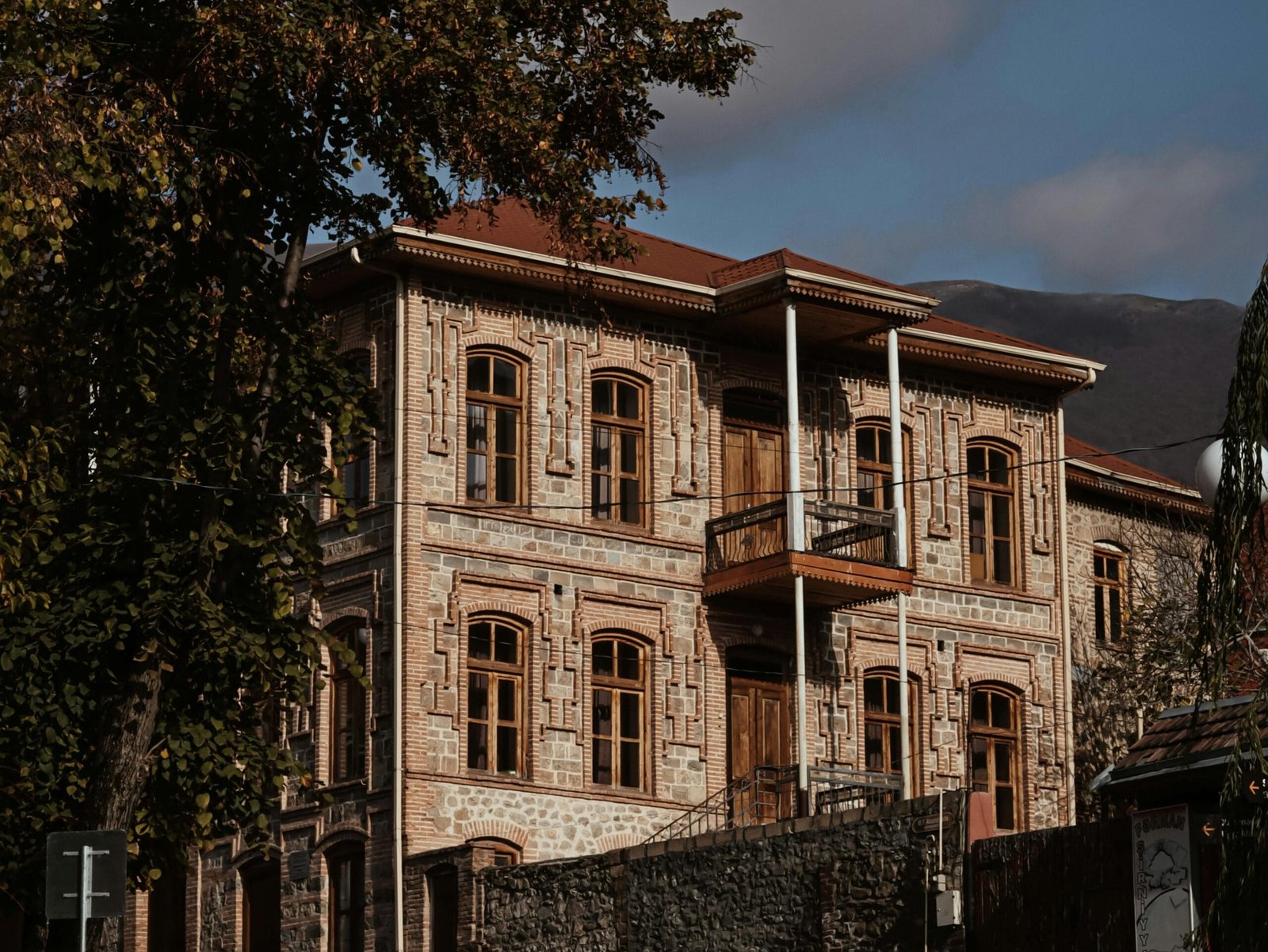
The city of Sheki was the capital of its own khanate, a kind of semi-autonomous principality that existed for part of the 18th and 19th centuries. Most of the buildings you will end up visiting were constructed during this period. Khans under whom it ruled were not only political figures but the patrons of arts and architecture, and that is why such a small city turned out to possess such marvelous constructions.
The Silk Road connection is not mere marketing history – this was, in fact, the place that was very significant in trade between Europe and Asia. Trading caravans would do the same to refuel, rest, and replenish. The caravanserai (merchant inns) were not only centers where people slept on the road but also the envy of emperors around which fortunes were made during negotiations over cups of tea and pilaf.
Top Attractions in Sheki, Azerbaijan
Sheki Khan’s Palace
This is the primary attraction, the reason why most people visit the park, and quite frankly, it is everything it is touted to be. Constructed in 1762 without a single nail, this palace features the craftsmanship that modern society would hardly be able to recreate. The front is encrusted with shakework, which is simply a kind of stained glass that is bound together by wooden latticework that is so delicate it appears like a piece of jewelry.
There is no square in the place that does not speak. The walls are painted in frescoes with hunting scenes, and there are also battles as well as geometrical images that can make your eyes weep if you stare long enough. The colors have remained intense almost after two hundred years due to the use of natural pigments and methods of painting, which were roughly lost in other regions.
In 2019, the palace was recognized by UNESCO as a World Heritage Site, and this is both good and bad news. Good in the sense that it allows them to be preserved and have maintenance finances. Bad as that translates to an increased number of tour groups and increased ticket prices. Go early in the morning because you will admire the place that has not finished selfies in each corner by an uncle of yours from Frankfurt.
The other thing common visitors are unaware of is that the palace, in fact, was not simply a residence – it was the administrative core of the whole khanate. The rooms were used to entertain foreign dignitaries as well as issues of law. The original carved wooden throne is still in the throne room, but sitting on it is prohibited.
Local guides love to point out hidden details in the frescoes – hunting scenes that actually depict real historical events, geometric patterns that contain mathematical principles, and color combinations that require importing pigments from as far away as India. The restoration work continues constantly, with craftsmen using traditional techniques and materials to maintain authenticity.
Shaki Caravanserai
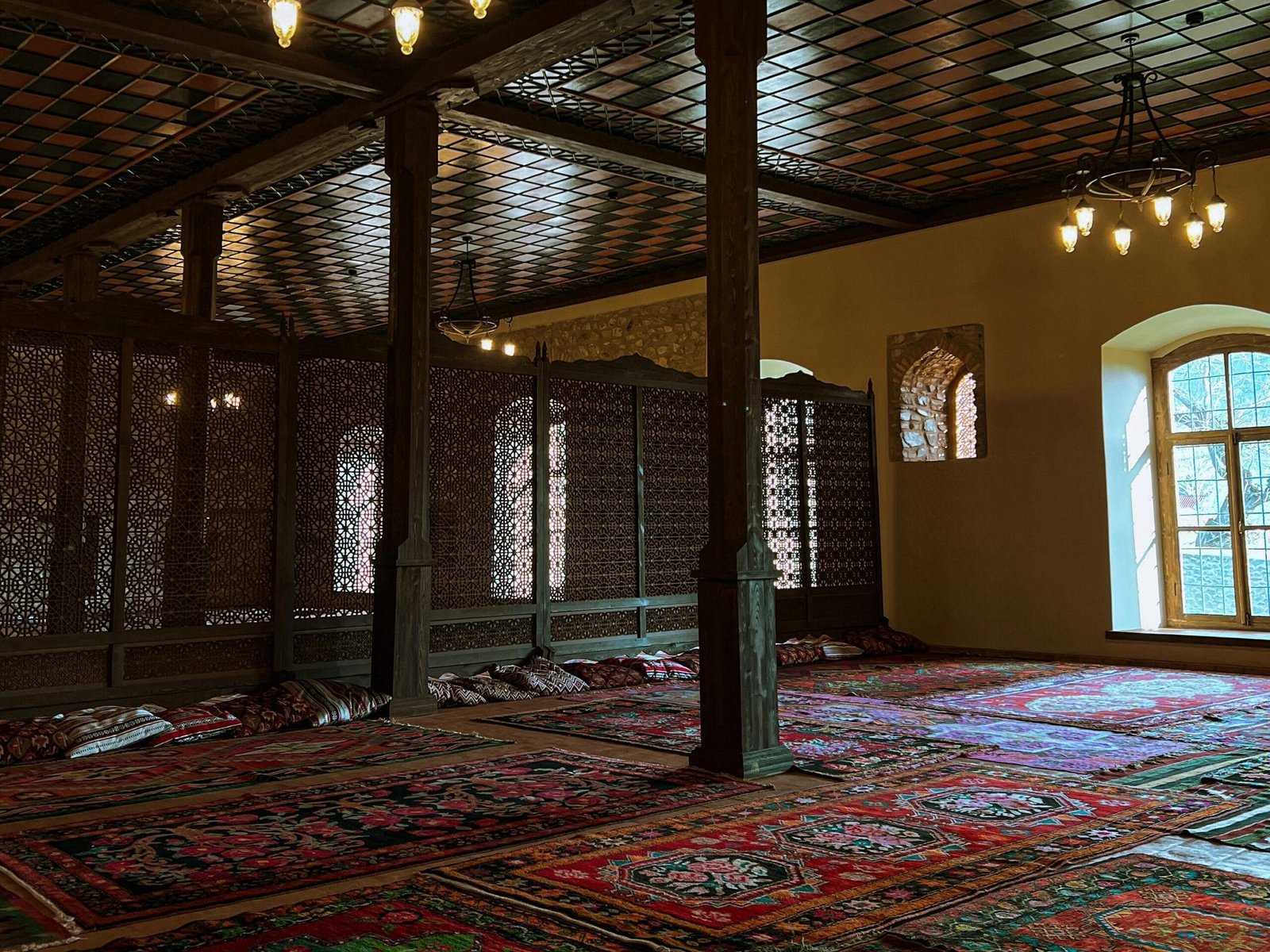
The Upper and Lower Caravanserais are still standing, still functional, and still accommodating travelers – though now they serve Turkish coffee instead of hosting camel trains. These weren’t luxury hotels; they were practical business establishments where merchants could store goods, feed animals, and sleep safely.
The architecture is brutally practical but somehow beautiful. Thick stone walls, arched doorways, and courtyards are designed to maximize security and efficiency. Walking through these spaces, you can almost hear the negotiations, the arguments over prices, the languages mixing together as deals were struck.
The caravanserai is turned into a hotel that might sound like a tourist trap, but it is a very genuine one. The rooms are simple yet comfortable, and the stay makes you feel what it must have been like to be a merchant 300 years ago, minus the bandits and dysentery.
The architectural features tell us interesting details of medieval trade. There were stables on the ground floor capable of holding more than 300 horses and camels. At the same time, the upper stories were used as sleeping quarters and storage of valuable goods. Much emphasis was placed on security – there was only one entrance, the walls were thick, and the inside of it had courtyards that could be closed off so that they could be safe in case of an enemy attack.
The value of the economic role of these buildings could hardly be overestimated: they supplied tax income of enough levels to the khanate and also essential services to long-distance trade. Coins, jewels, and fragments of pottery found during archaeological diggings in the courtyards point to Asia and Europe, as well as the merchant traffic that crossed through these plazas. Local craftsmen continue to rent small workshops in the caravanserai group and preserve centuries-old traditions of trade and craft making.
Azerbaijan Castle Ruins
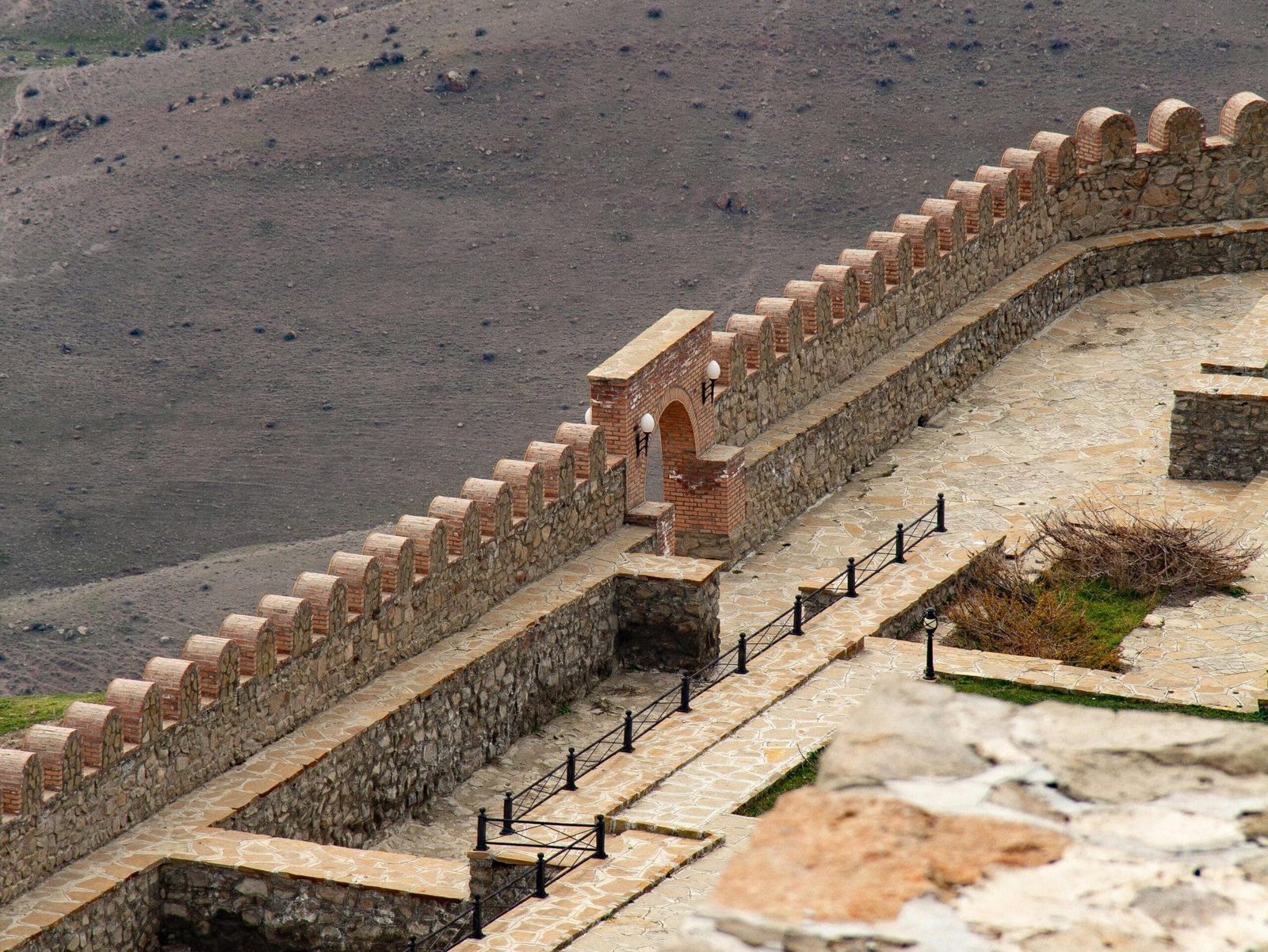
Situated around Sheki are castle ruins, which represent some of the defensive buildings that were constructed through the centuries. The majority are in a rather serious state of collapse, but that is the charm. They are not reconstructed tourist sites where you have plaques and souvenir shops, but simply old ancient stones, gradually being returned to the ground.
The greatest ruins are scattered in various parts all over the region, and sometimes, the destination to the ruins is a small hike. There are places that could not be found on any map, but local guides could show you where to sit on the stones that have been observing this valley for centuries.
These defensive structures tell stories of constant conflict and strategic importance. The positioning wasn’t random – each castle commanded crucial mountain passes or river crossings, forming a network of fortifications that could communicate through signal fires and messenger routes. Many date back to the medieval period when local rulers needed protection from various invading forces, from Mongol armies to Ottoman expansion.
The ruins usually have cisterns, storage rooms, and dwellings directly chiseled into walls of rocks, and their skill of engineering themselves is astounding. To visit the sites, it is important to have a good pair of shoes and some physical fitness since it is possible to feel the need for steep and unmarked paths. It is worth the climb to have spectacular views of the valleys and the silence that can be experienced at places where history was played out in a rather violent and dramatic way.
Winter snow may dent the possibility of visiting; keep that in mind.
Kish Albanian Church
It is one of the oldest Christian places in the region, located about 15 kilometers outside of Sheki. Things are not very large or impressive: in fact, it is a minor, modest structure that withstood invaders, religious transformations, and all the turmoil of the history of the Caucasians.
The church has an origin that dates back to the 1st century AD, which is also prior to the majority of European Christianity. The present construction dates to the 12th century, although archaeology indicates that the site has been devoted to religion for almost two thousand years. The encircling cemetery is marked with inscriptions in different languages, which shows the variety of communities that have inhabited this region.
New archaeological discoveries have found layers of building and rebuilding, indicating how the place responded to varying religious and political conditions. The basement houses the oldest Christian altar in the Caucasus area, yet only special permission and preparation can allow you to enter the basement.
The church accommodated many Christian traditions during centuries of existence, such as the elderly Armenian, Georgian, and Albanian Orthodox people. It served as a grain storage facility during the Soviet era, and this ironically led to the maintenance of many elements in architecture that would otherwise not have remained. The surviving frescoes are only partial and important, demonstrating influences of Byzantine, Persian, and local styles of art.
The surrounding village of Kish maintains some traditional practices and crafts, making the trip worthwhile beyond just the historical significance. The journey there takes you through beautiful countryside and small settlements that see few international visitors.
Local Bazaars and Artisan Workshops
The bazaar in Sheki isn’t designed for tourists, which makes it infinitely more interesting than the sanitized markets you’ll find in larger cities. People come here to buy actual necessities – vegetables, tools, fabric, household items. The tourist goods exist, but they’re mixed in with real commerce.
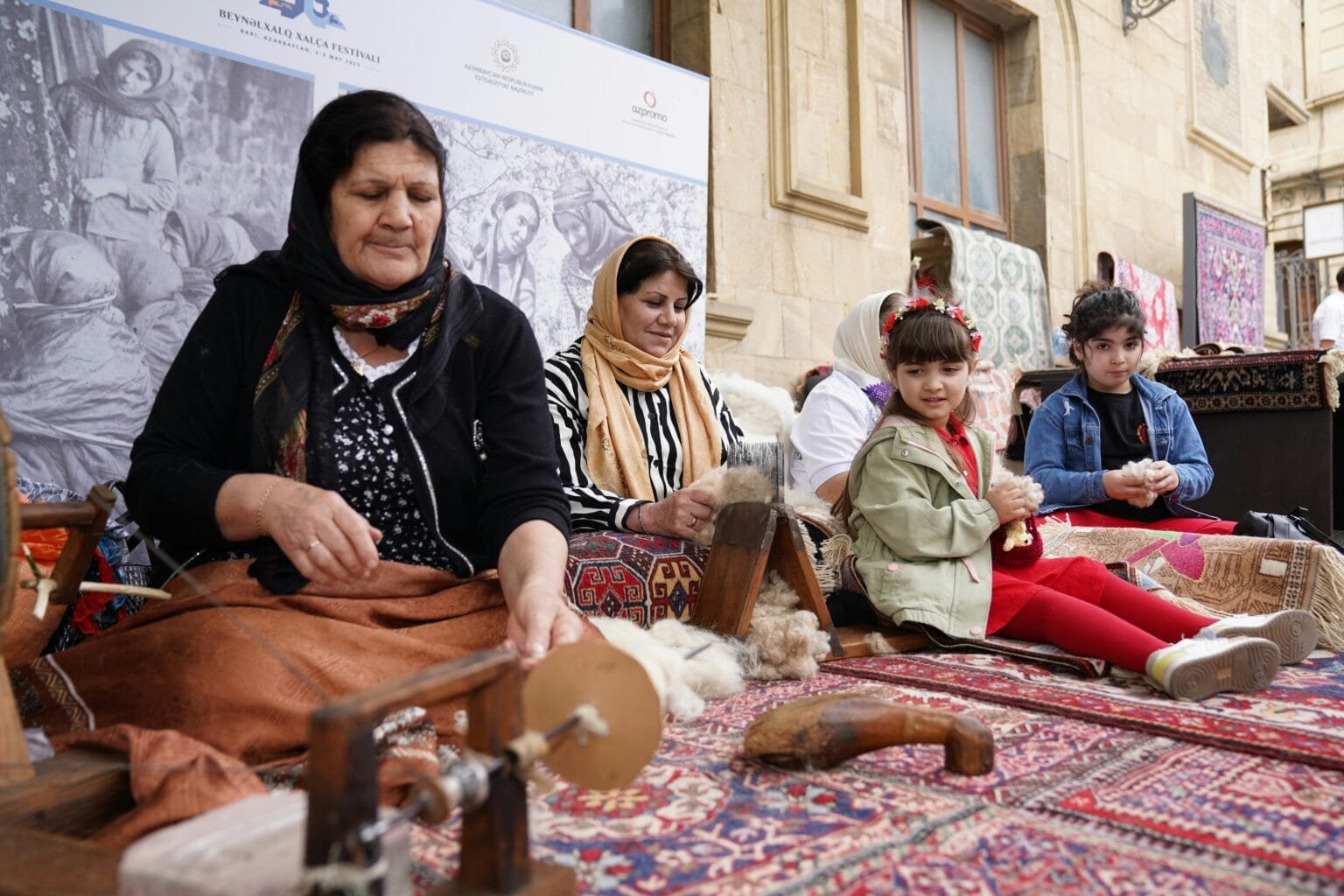
Several workshops around the city still practice traditional crafts. Carpet weaving, silk production, metalwork, and wood carving continue much as they have for generations. Many artisans are happy to demonstrate their techniques, though don’t expect English commentary. Bring a translator app, or just watch and appreciate the skill involved.
The bazaar operates on rhythms that have little to do with tourism schedules. Early morning brings farmers with fresh produce, while afternoons see craftsmen selling finished goods and housewives negotiating for household necessities. The social dynamics are as interesting as the commercial ones – this is where community news spreads, relationships are maintained, and local politics are discussed over tea.
Some vendors have been operating from the same stalls for decades, inheriting locations and customer relationships from their parents and grandparents. The seasonal variations are dramatic – spring brings an explosion of fresh herbs and vegetables, while autumn features nuts, honey, and preserved foods for winter storage. Prices aren’t fixed, and negotiation is expected, though foreign visitors often pay slightly more than locals.
The experience of shopping here is fundamentally different from modern retail – personal relationships matter more than efficiency, and quality is judged by standards that have evolved over generations rather than corporate branding.
Shiki’s Cultural Heritage
The cultural traditions here aren’t museum pieces – they’re living practices that continue because they serve actual purposes. Carpet weaving isn’t maintained for tourists; it’s maintained because people still use carpets. Silk production continues because there’s still demand for quality silk goods.
The local museum, housed in a 19th-century merchant’s house, contains collections of traditional costumes, jewelry, weapons, and household items. It’s small and somewhat haphazardly organized, but that gives it character. The elderly curator knows stories about almost every item and will share them if you show genuine interest.
Conventional music and dances are conducted on a regular basis, especially during wedding seasons and festivals. Such events are not artificial cultural performances but real celebrations during which the traditional arts play purposeful social roles. And if you ever get lucky enough to see one, keep in mind that you are looking at a live culture, not a show performed in your honor.
The bond that the city has with craftsmanship goes to architecture. Several buildings have elaborate woodwork, stone carvings, and decorations, which are unique and need expertise and skills. The skills exist today among local craftsmen, but with each passing generation, families are gradually becoming smaller as economic opportunities wither away into bigger cities.
What to Eat in Sheki
Leave all your notions about regionally based cuisine – Sheki has its own food culture, and it does not exactly fit what you might get somewhere. The regional dishes will not be spins and variations of traditional cuisine or fusion dishes. They are simply the foods that the folks here have been consuming well down through the years.
Piti is what all people will recommend you to eat, and they are right. It is lamb stew prepared in separate clay pots and served in a form that demands certain eating methods. It consists of pouring the broth into another bowl, beating the rest of the stuff up together, and eating it with bread. Disregard the method. However, if you like it, it is fantastic no matter what.
Sheki baklava is not what you can get at a restaurant in the Mediterranean. It is thinner and crispier, and it contains local nuts and honey, which produce unusual flavors that you cannot find anywhere. It needs special skills to prepare. It is hard to think of more than a dozen who know how to do it right in town, and they lack no age.
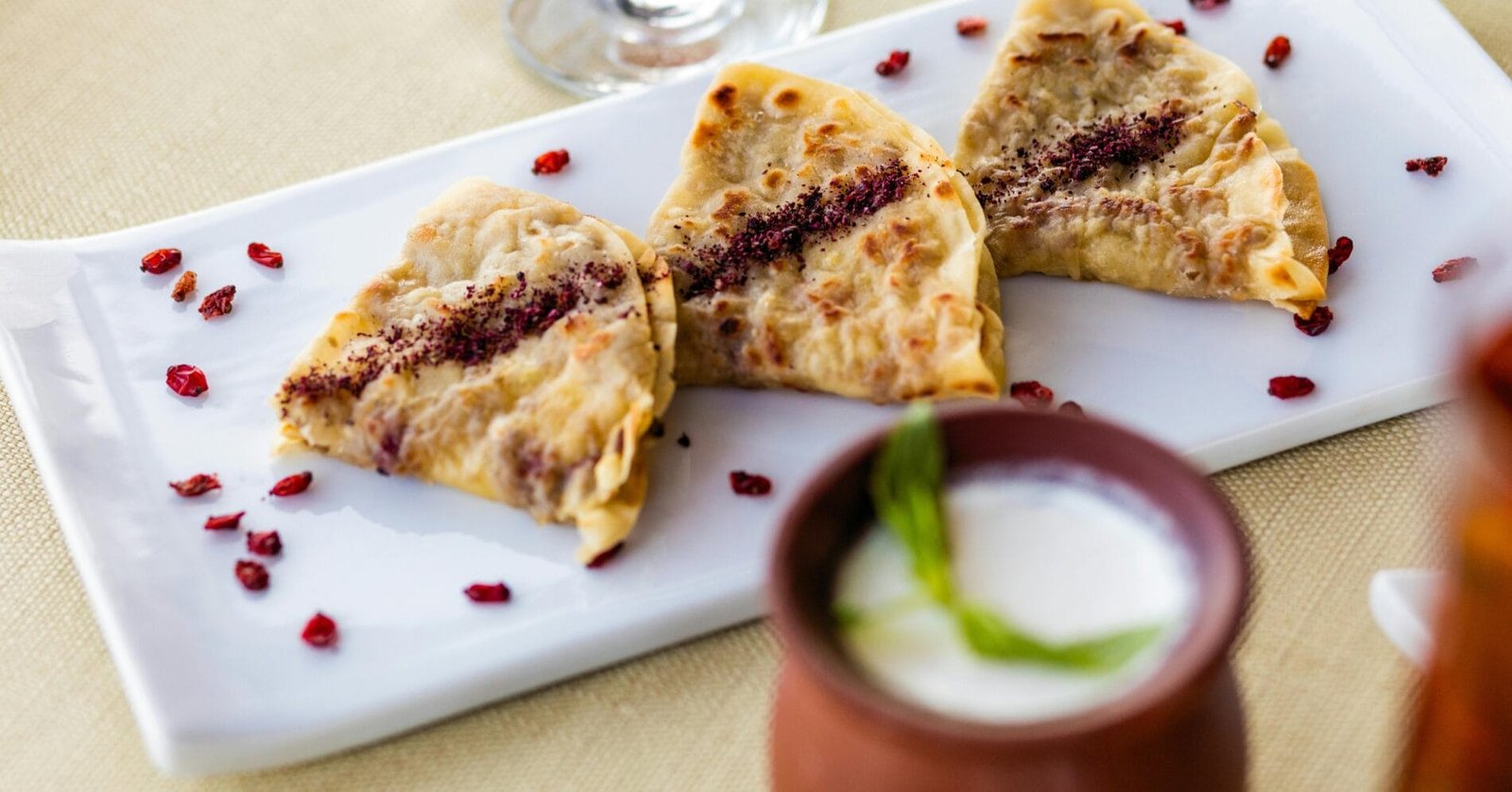
The local restaurants offer halva, Qutab (flatbreads with herbs), donga (yogurt soup), and other kebab varieties, which are made using local spices and applications. The serving is large, and the prices are affordable.
Read also: Azerbaijan Food: Taste 10 Most Flavorful Cuisines
When to Visit Sheki
The weather here follows mountain patterns, which means it can be unpredictable regardless of season. Spring arrives in May with wildflowers and comfortable temperatures, making it ideal for walking around cobblestone streets without sweating through your clothes. Fall brings similar conditions with the added benefit of harvest season – local markets overflow with fresh produce, and the landscape turns colors that would make landscape photographers weep.
Summer gets hot, but not unbearably so. The mountain location moderates temperature extremes, though July and August can still be uncomfortable for extensive outdoor exploration. Winter is cold and often snowy, which can be beautiful but limits transportation options and makes some attractions inaccessible.
The city hosts several festivals throughout the year, though they’re not heavily promoted to international tourists. The spring music festival features traditional and contemporary performances, while autumn brings harvest celebrations that include food competitions and craft demonstrations. These events happen when they happen – exact dates depend on weather, agricultural schedules, and local organizing capacity.
Where to Stay in Sheki
Accommodation options range from basic to comfortable, with nothing approaching luxury by international standards. That’s not necessarily a bad thing – staying in overly polished hotels can insulate you from the actual character of a place.
Sheki Saray Hotel occupies a restored historical building and provides the most amenities, including reliable hot water and English-speaking staff. Sheki Palace Hotel offers similar services in a slightly different setting. Both are perfectly adequate for most travelers’ needs.
The real experience comes from staying in family-run guesthouses or the converted caravanserai. These places won’t have five-star amenities, but they offer something more valuable – authentic interaction with local hospitality traditions. Expect shared meals, enthusiastic attempts at cross-cultural communication, and sleeping arrangements that prioritize character over convenience.
Book accommodations in advance during peak season, though “peak season” here means times when a few dozen extra tourists might show up. The local tourism infrastructure operates on a much smaller scale than major destinations, which means both greater personal attention and less flexibility when things go wrong.
How to Get to Sheki
It is not an uncomplicated process coming here, but it is not a direct process either. The majority of drivers come by car – out of Baku, and the road passes through some rather picturesque mountain landscapes.
Bus Line: Next, there is a bus-line that comes at the appointed hour. The main station where the marshrutka vans and big coach buses depart to Sheki is the International Bus Terminal in Baku. The average travel time by marshrutka is 4-4.5 hours, and the fare is 13.20 AZN. Currently, there are at least 4-5 services a day, which include time slots: 9.50 am, 11 am, 2 pm, and 10.30 pm. However, cross-check locally.
The road between Baku and Sheki is rather steep and, at some points, windy, so bring some non-drowsy motion sickness medication in case you need it.
Upon arrival, get out of the station and begin to walk north. The UniBank (by the fountain) has a bus stop where you can take the city bus to the center or castle area. Instead, one should be able to take a taxi to the center via the bus station, costing 1-2 AZN.
If you want to return to Baku, know that buses leave Sheki every 30-60 minutes from 6.30 am to 6 pm.
Train: The other alternative is the use of trains. It is possible to use an overnight train service on the route Baku-Sheki as well. This train runs once a night out of Baku (at the 28 May Station) at 11.50 pm and into Sheki Railway Station at 5.45 am the following morning (the duration of the trip: 6 hours).
To come back, the trains leave Sheki past midnight and reach back to Baku at 6.40 am.
This train has three classes (all of them with beds): Standard, Standard Plus, and Business. Two-way ticket prices are 16-70 AZN, and the ticket can be bought a maximum of 30 days before traveling online on the official Azerbaijan Railways website or at the station.Sheki Railway Station is approximately 20 km away from Sheki town center. Approximately the price of a taxi is 10-20 AZN.
Airplane: The quickest way to reach is via plane. You should arrive by plane. Your nearest airport is the Gabala International Airport, which is approximately 55 kilometers away.
Frequently Asked Questions (FAQs)
About 300 kilometers, roughly four hours by car under normal conditions. Bus travel takes longer due to stops and schedule variations.
May and October offer the most comfortable weather conditions. Summer works but can be hot, while winter limits some activities due to weather conditions.
Yes, crime rates are low, and locals are generally helpful to visitors. Standard travel precautions apply, but the city presents no unusual safety concerns.
Technically, it’s possible from Baku, but you’ll spend most of your time traveling. Plan at least one overnight stay to make the journey worthwhile.
The manat is the local currency. Russian and Turkish are widely understood, and they are the local languages. English is limited, but younger people often have basic conversational skills.
Conservative dress is appropriate, especially when visiting religious sites. Comfortable walking shoes are essential for cobblestone streets and uneven surfaces.
A standard tourist visa covers all activities in Sheki. No additional permits are required to visit historical sites or take photographs.
Conclusion
Sheki represents something increasingly rare in modern travel – a destination that hasn’t been completely transformed by tourism. The city maintains its authentic character not through careful preservation efforts but because it continues to function as a real place where real people live and work.Ready to experience this Silk Road city for yourself? Start by securing your Azerbaijan e-visa through https://visaforazerbaijan.org.uk/ or contact our team at service@visaforazerbaijan.org.uk for personalized assistance with your visa application. Sheki is waiting, but it won’t wait forever – places like this have a way of changing once too many people discover them.
Eligible Countries for Azerbaijan Visa
| 🇮🇳 India | 🇵🇰 Pakistan | 🇸🇦 Saudi Arabia |
| 🇺🇸 United States of America (USA) | 🇬🇧 United Kingdom (UK) | 🇨🇦 Canada |
| 🇮🇹 Italy | 🇱🇰 Sri Lanka | 🇪🇸 Spain |
| 🇦🇺 Australia | 🇳🇱 Netherlands | 🇩🇪 Germany |
| 🇴🇲 Oman | 🇰🇼 Kuwait | 🇮🇱 Israel |