

Azerbaijan is a country where mosques, churches, synagogues, and ancient fire temples coexist without any problems. It serves as a platform of various faiths and hosts a multitude of religions including Islam, Christianity, Jewish, and Zoroastrian as well.
The country welcomes travelers into a country that blends historical religious traditions with contemporary secular beliefs. The small Caucasian state will astound you through its diverse religious beliefs and extensive spiritual culture. Touring Baku’s alleys or rural areas lead you to experience religious sites where mosques share space with churches and synagogues.
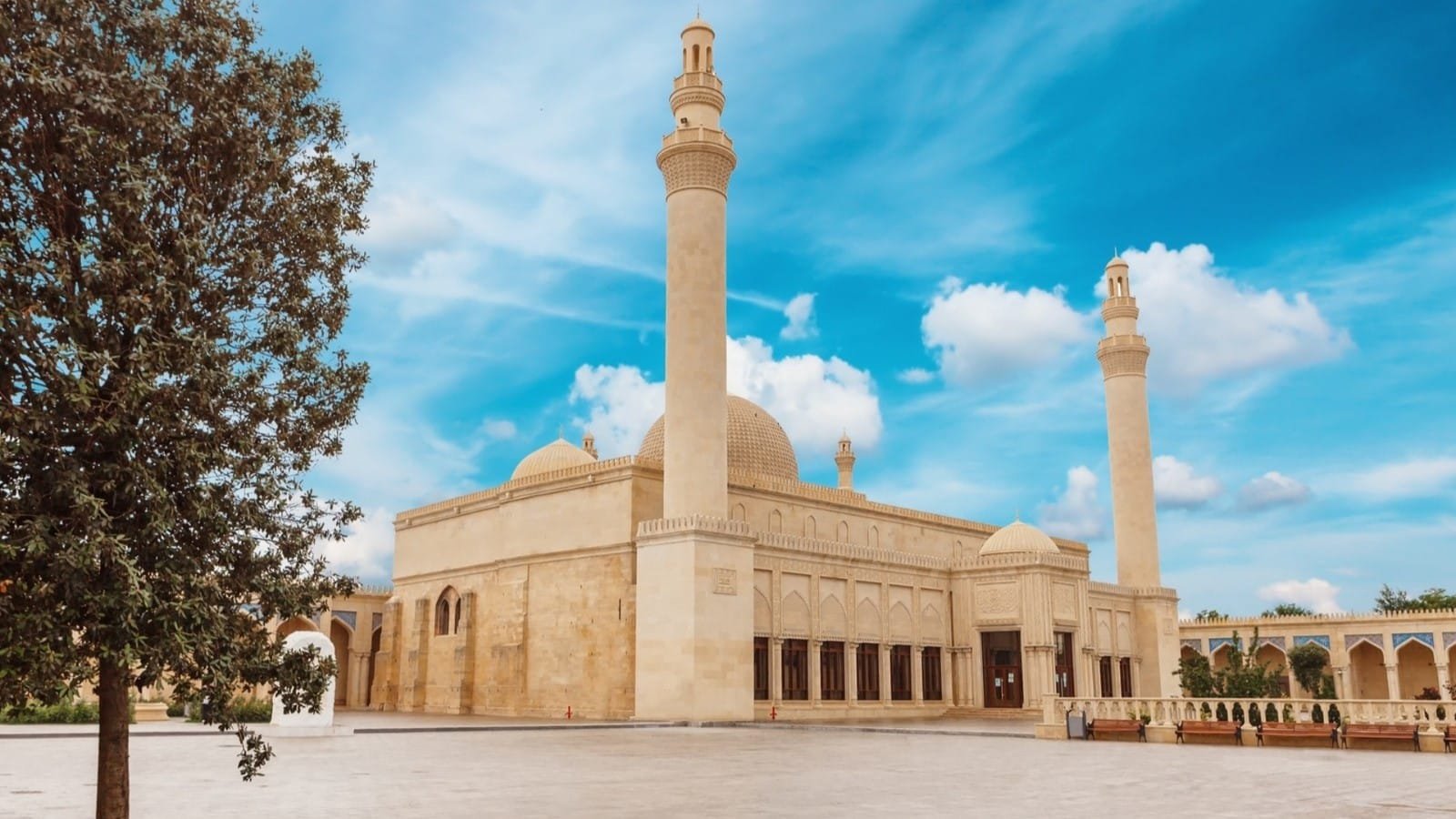
The sacred soul of Azerbaijan reveals itself through the coexistence of Islamic traditions alongside Christian and Jewish practices while incorporating Zoroastrian history. The nation maintains an uncommon religious tolerance between Sunni and Shia Muslims because it has successfully established a balance between these Muslim groups in today’s world.
Quite fascinating, right? Analyzing all the benefits Azerbaijan offers makes it an ideal spot for your future travel plans.
But wait, to do that – you will require a visa to Azerbaijan. Fortunately, you can snag an e-visa from our website at visaforazerbaijan.org.uk for a hassle-free experience in this culturally rich nation.
Historical Context of Religion in Azerbaijan
One must examine its historical heritage to fully comprehend its religious beliefs. The Persian-influenced Zoroastrian religious practice thrived throughout this region beginning during the first millennium BCE before the arrival of Islam. The region experienced the burning flames of Zoroastrian fire temples during the time when Azerbaijan belonged to the Achaemenid and Sassanid Persian empires.
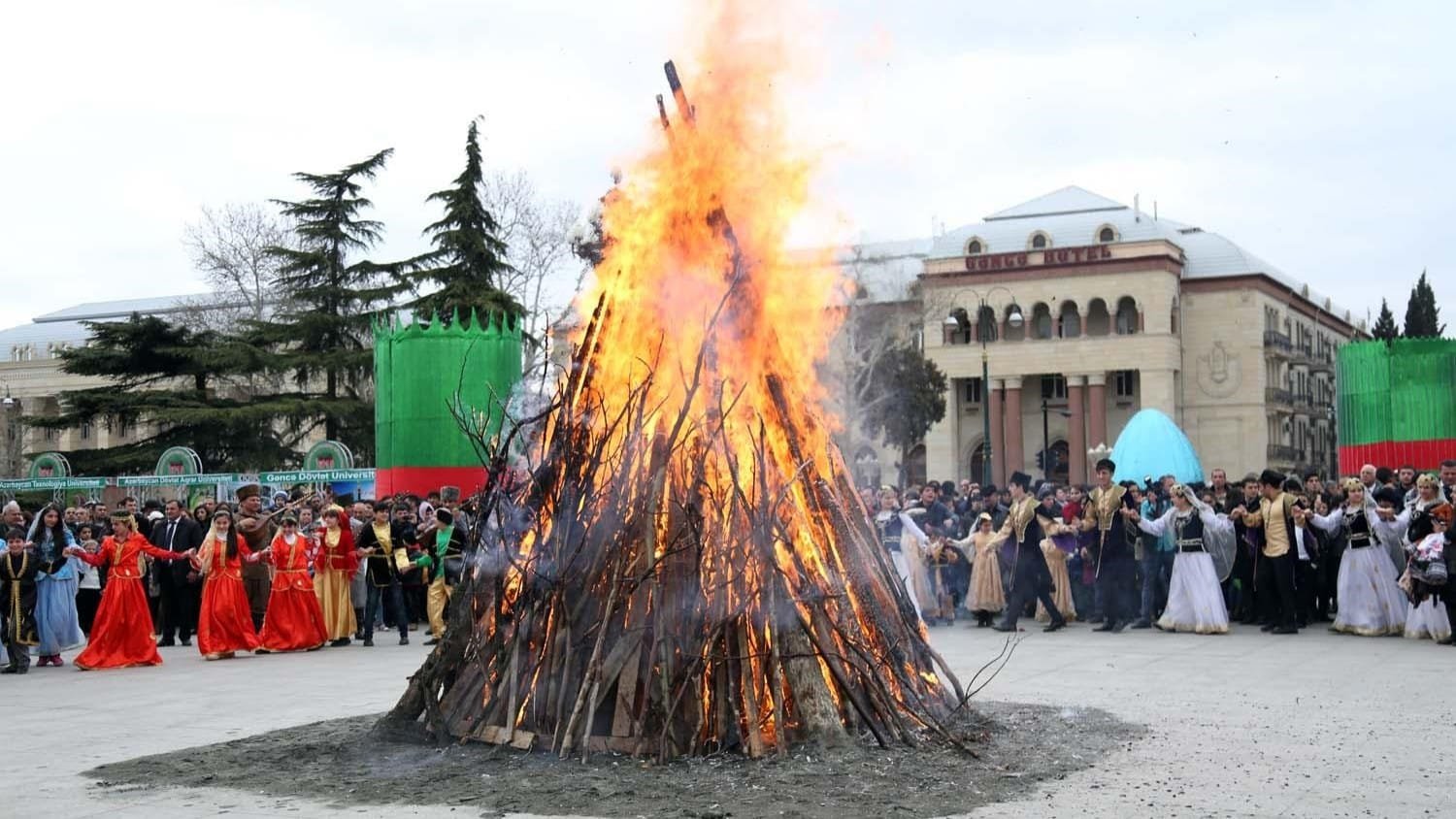
During Novruz Bayrami celebrations, local citizens uphold Zoroastrian cultural traditions even up to present times. During the Persian New Year celebration which marks Novruz Bayrami Azeri, people celebrate this holiday with bonfires and joyful gatherings following the traditional custom of jumping over the flames.
Islam entered Azerbaijan in the 7th century CE to transform its religious systems permanently. Arab conquests delivered Islam as a new faith to the region that eventually became here the main religion. The unique religious history of the country is fascinating because Islam integrated local beliefs instead of substituting them and shaped itself into a tradition and identity.
Major Religions in Azerbaijan
Islam: The Predominant Faith
A lot of people question: “is Azerbaijan a Muslim country?” Well – yes, but there’s more to it. The overwhelming majority of Azeri citizens from 93% to 99% adhere to Islam – which functions as the dominant religion across the country. Muslim identity offers only a partial description of this nation.
What makes the country’s religion exceptional is the religious division between Sunni and Shia Muslim communities. The religious identity of Azerbaijan reveals itself through an examination of its historical development because it exists between Sunni and Shia sects of Islam. Azerbaijan holds a special geographic position where Shia Islam gets adhered to by 55-65% Muslims, while Sunni Islam remains the faith of 35-45% of the Muslim community.
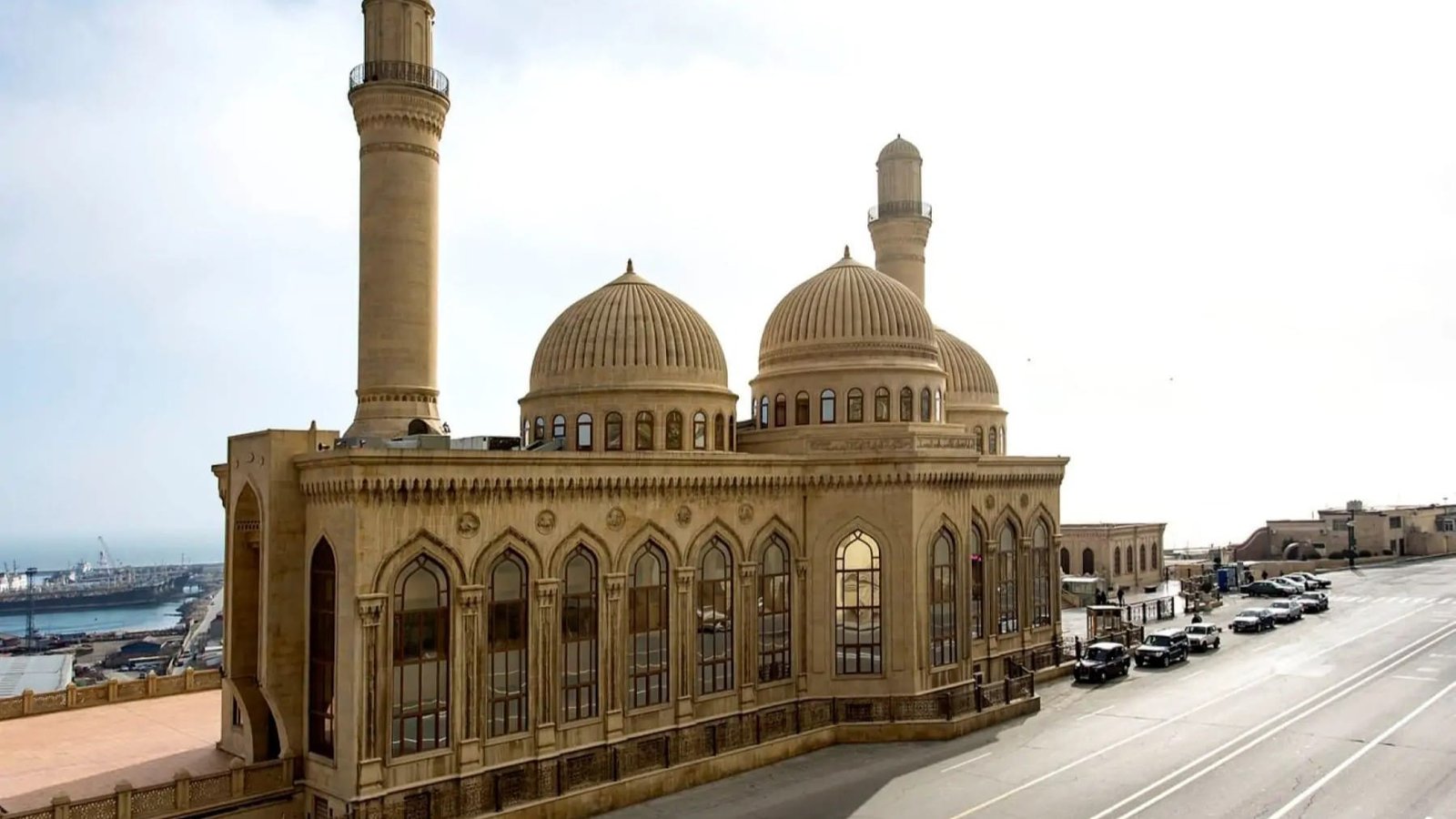
The historical geopolitical developments of Azerbaijan created the present-day split between its religious groups. Since ancient times, the country possessed Persian-ruled territories – which established enduring religious characteristics throughout the region. Azerbaijani religious identity bears permanent marks, which were adopted from Iran, which established Shia Islam as its national religion. Other communities underwent modification while under the dominion of the Ottoman Empire in addition to other Sunni powers.
Throughout various Azerbaijani regions, you may detect minor religious distinctions between Sunni and Shia traditions while modern practices result in singular Azerbaijani interpretations of Islamic faith.
Christianity in Azerbaijan
Azerbaijan has a strong Christian heritage that most travelers would not predict. The territory you walk on in Baku consists of soil that sustained Christian beliefs that stretched over two millennia. Apostle Bartholomew served as the first Christian missionary to bring religion to these regions while he was among the twelve disciples of Jesus. Local tradition holds that he was martyred in 71 CE near what is now the iconic Maiden Tower in Baku, making this spot sacred to Christians for two millennia.
Catholicism came to Azerbaijan when Dominican alongside Carmelite and Franciscan missionaries brought it in the 14th century. The Catholic population of Azerbaijan exists as 500-strong members who remain influential despite their small numbers. The Church of the Blessed Virgin Mary’s Immaculate Conception reveals the church’s longevity while the 2002 visit by John Paul II demonstrated Azerbaijan’s support for various religious practices.
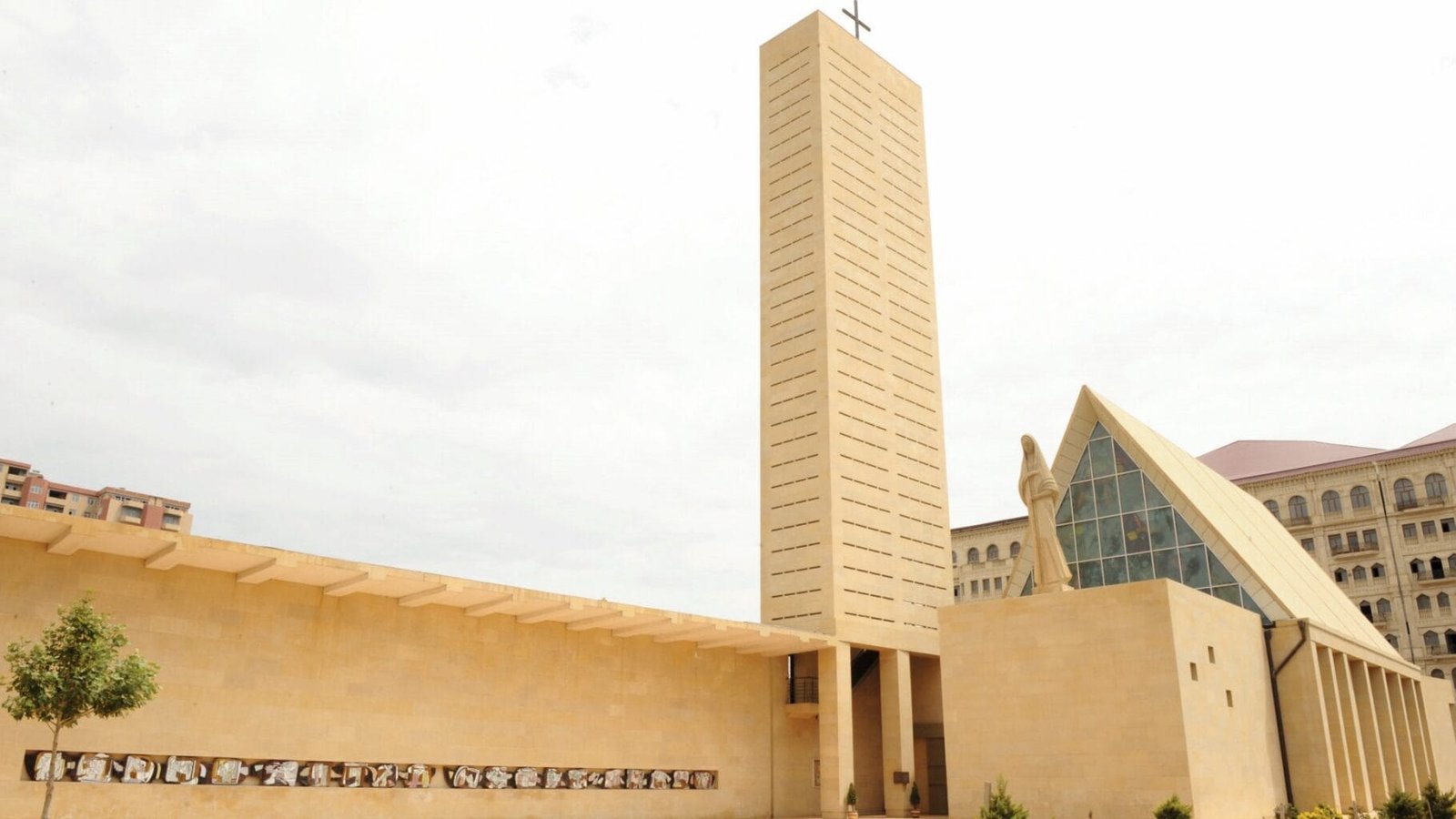
Additionally, the Christian presence here includes approximately 25 dispersed small Protestant-Baptist communities as well, that contribute to the country’s religious diversity.
Judaism in Azerbaijan
One can uncover the country`s impressive Jewish history while examining religious practices in Baku along with the broader local religious traditions. The largest ethnic Jewish communities of Azerbaijan include Mountain Jews, Ashkenazi Jews and Georgian Jews who bring distinct cultural practices from their pasts.
Over two thousand years, the Mountain Jews, known as Juhuro, have constructed a specialized heritage in the Caucasus region. Located just outside Israel and the United States stands Qırmızı Qəsəbə (Red Village) in northern Azerbaijan among remarkable Jewish settlements.
Baku residents can access six functioning synagogues across the entire country. The Baku synagogue established its doors in March 2003 as one of the largest houses of worship in Europe, and thereby brings happiness to people of different faiths across Azerbaijan. Throughout the world, it has become unusual to find Jewish cultural centers and religious organizations yet Azerbaijan enables their prosperity through their unusual tolerance.
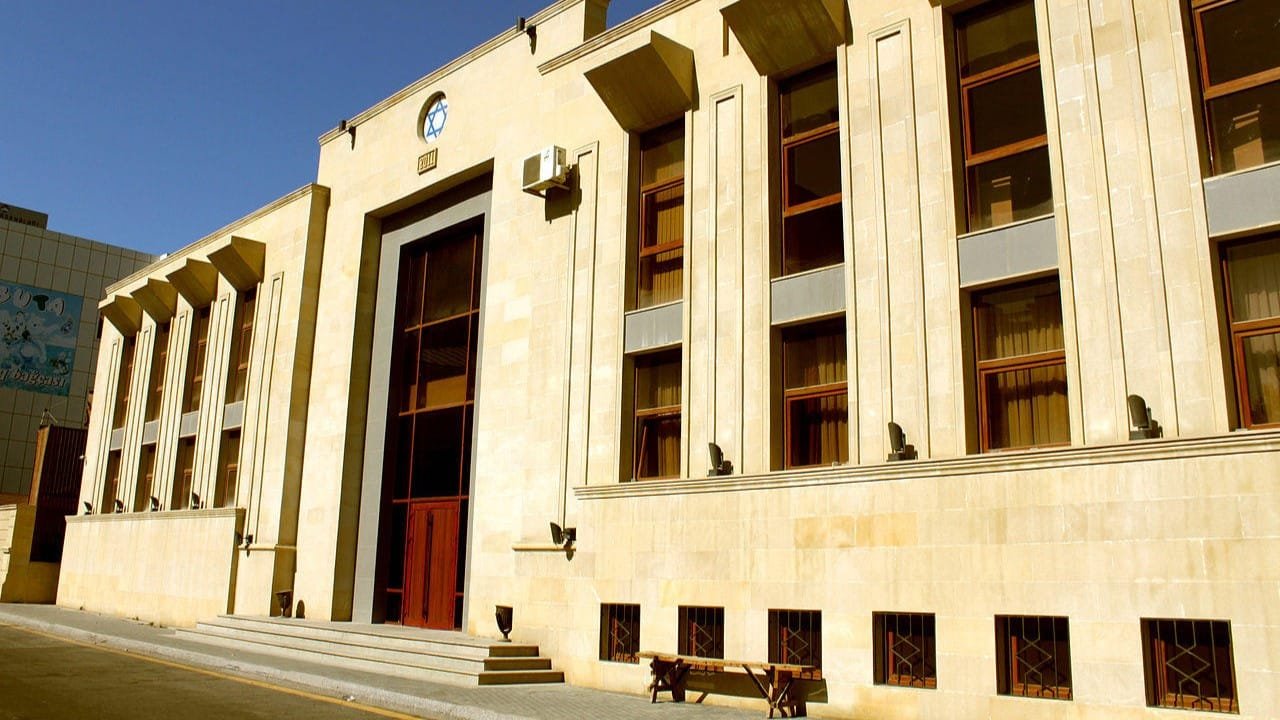
The analysis of religion within the country’s population provides valuable insights about this multicultural community. People in Azerbaijan commonly respond with their religious beliefs when asked about their nationality. The majority of demographic research shows Azerbaijan has a Muslim majority alongside important religious minority groups.
Muslims represent approximately 93% to 99% percent of the total – approximately 10 million citizens who live here. Historical patterns show Shia Muslims constitute 55%-65% of Azerbaijan religious followers while Sunni Muslims comprise about 35%-45% of the Muslim population.
Christians exist as a restrained yet important minority group within Azerbaijan representing just 3% of total population numbers. Out of these, most identify as Orthodox Christians who are linked to the Russian or Georgian Orthodox Churches. However, as we disclosed earlier – there are small Catholic and Protestant communities as well.
Now – let’s talk about the Jewish population – although they comprise less than 1% of the total population, they hold a cultural importance that extends far past their small numbers. Various smaller religious movements together with Baha’i and Hare Krishna traditions, form the lesser part of Azerbaijan’s religious population.
Despite being mostly Muslim, this country successfully prevents sectarian violence, which plagued communities with mixed Sunni-Shia populations. During your visits to Baku and other cities, you can observe Sunni and Shia Muslim worshippers praying together in these same holy places, which demonstrate genuine religious conciliation.
Azerbaijan as a Secular State
It has established a secular constitution as one of the most distinctive elements of its religious system. The official main religion of Azerbaijan is Islam with a big Muslim population yet the government establishes a clear border that keeps religion separate from state governance.
Azerbaijan maintains a secular framework based on laïcité, which establishes institutional independence between state and religion. Here’s a prime example: Public school students are not forced to study religion as part of their curriculum. However, all religious organizations here must register with the governmental body.
Read also: Study in Azerbaijan: A Complete Guide to Universities, Costs, and More
In the Soviet era, Azerbaijan initiated a secular system where religious displays were forbidden. However, when the country got freedom in 1991, it refrained from allowing religious rule like other ex-Soviet nations. Instead, it stood firm on secularism.
Religion demonstrates its presence throughout Azerbaijan, though it does not occupy primacy in official activities or public areas like other Muslim nations. Women here have personal choices regarding hijab, while people in the country can legally drink alcohol and interact with Western fashion trends.
The country’s modern status together with its respect for religious heritage makes Azerbaijan a fully developed contemporary state. These sophisticated arrangements have established both national progress and domestic peace.
Cultural Impact of Religion
The government operates as a secular system while religious values define both cultural elements and conventional customs that extend to every aspect of daily routines. The way religion shapes traditional architecture will become evident to anyone spending time among Azerbaijanis along with traditional music and social customs and food selections.
Islamic beliefs and practices naturally occur in various ways throughout social structure. For instance:
- The sacred period of Ramadan requires Azerbaijani people to fast from dawn to dusk, and they joyfully celebrate its conclusion with the Ramadan Bayrami festivities, which include family reunification and feasting with food.
- Muslims commemorate Eid al-Adha (Qurban Bayramı) by performing their religious duties and then donating meat to everyone, starting from their neighbors and extending to those who need it.
Islamic beliefs in Azerbaijan show complete fusion with the pre-Islamic traditions that came before them. Here are a few examples:
- It uses Novruz Bayramı as its principal festival because this celebration began in Zoroastrian religion. It continues to be popular among every individual in Azerbaijan today. Traditional family preparations of special sweets occur during the weeks leading up to spring equinox to symbolize new beginnings. Moreover, people celebrating this festive occasion, perform bonfire jumping as a tradition to eliminate misfortunes.
- The cultural diversity includes contributions from its Christian and Jewish communities. Azerbaijan observes Orthodox Easter and Christmas ceremonies during winter and spring times and these holidays feature specific Caucasian traditions which remain unique to the country.
- Religious influences extend to the arts as well. Mugham stands as Azerbaijan’s unique musical tradition, which is shaped by Islamic mystic spirituality along with ritual practices that predate Islam. You can hear thousands of years of sacred wisdom expressed through the melodic beats of this art form, which UNESCO has designated as a cultural treasure.
Religious Tolerance and Coexistence
You might wonder, “Are Azerbaijanis Muslim?” or “Is Azerbaijan a Muslim country?”Well – yes and no. Here’s a simple answer – while most citizens practice Islam and are Muslims, their religious character is best defined by their historical tradition of respecting diverse religions together in harmony.
Azerbaijan surpasses other regions that often face religious conflicts. The country is able to do so thanks to successfully developing a multi religious coexistence that exists both peacefully and actively. If you ever visit Azerbaijan, you’ll get to see it with your own eyes.
The religious communities in Baku also successfully coexist within close proximity. Hence, demonstrating a type of diversity that isn’t found in most Muslim-majority nations. Every community over there – follows rules of mutual respect in their relations with others. Judicial representatives in the Orthodox Church of Azerbaijan initiate respectful dialogues between Muslim and Jewish authorities that create mutual advantages.
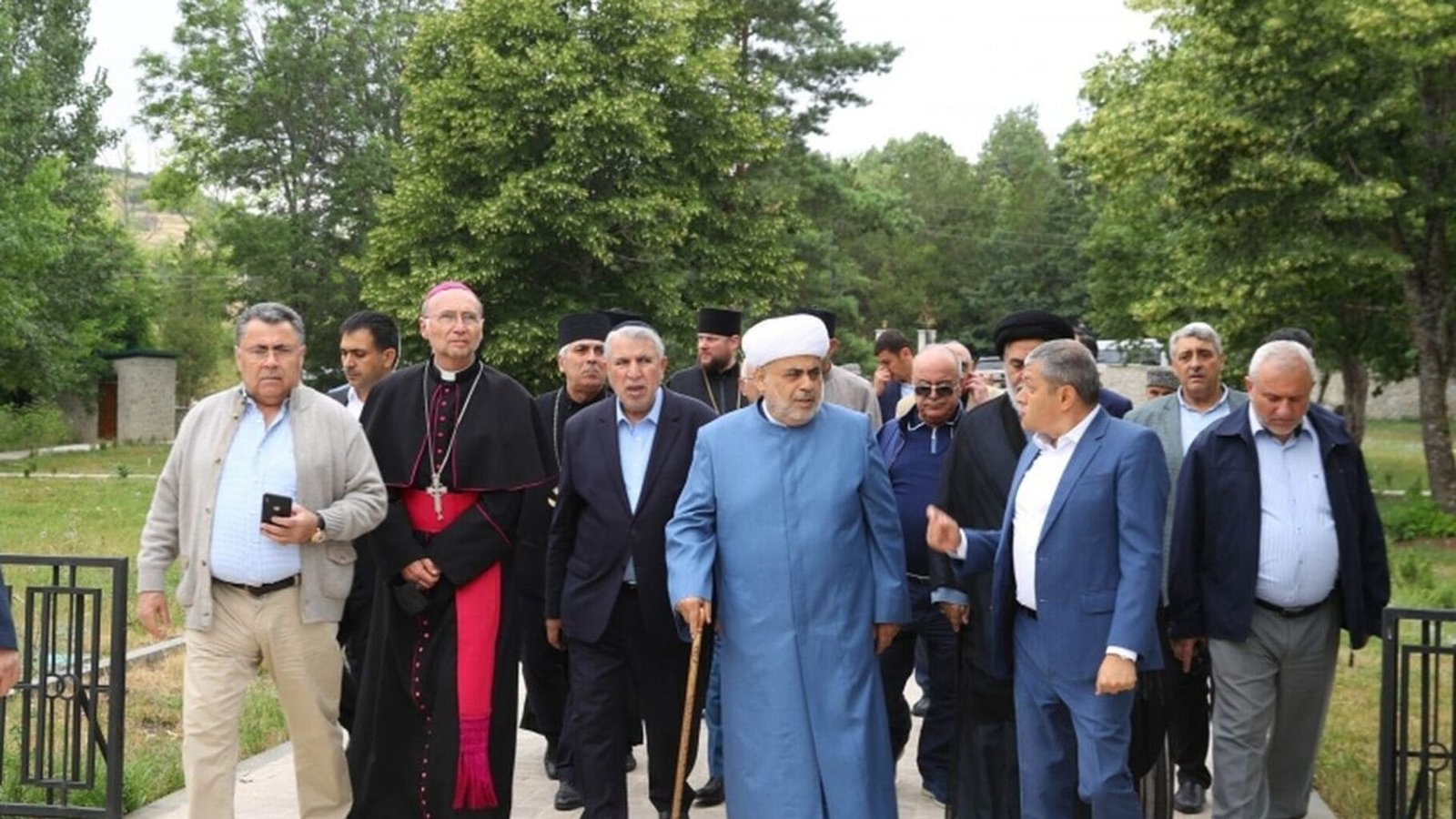
Through many years, the nation of Azerbaijan has institutionalized tolerance practices as part of its historical development. The turmoil occurring worldwide enabled numerous Jewish societies to establish residence here as their place of sanctuary. The nation of Azerbaijan protected these Jewish people when they fled persecution, which happened during the Holocaust during World War II.
All in all, Azerbaijan demonstrates peaceful religious coexistence to its neighbors and other nations because it has preserved this cooperative tradition despite the conflicts present throughout the region.
Conclusion
The religious identity of Azerbaijan expresses a special union between historic customs and up-to-date worship traditions. It is a country where Islam, Judaism, Christianity and Zoroastrian heritage live together.
And, if you’re still wondering “what is the main religion in Azerbaijan?” It’s Islam. But the full picture of religions here reveals a far more complex and colorful picture.
If you’re inspired to experience its unique religious landscape, do visit the country. But first, remember to secure your necessity of visa. You can easily get an Azerbaijan visa through our website at visaforazerbaijan.org.uk. For any questions about your travel plans, don’t hesitate to contact us at service@visaforazerbaijan.org.uk.
Eligible Countries for Azerbaijan Visa
| 🇮🇳 India | 🇵🇰 Pakistan | 🇸🇦 Saudi Arabia |
| 🇺🇸 United States of America (USA) | 🇬🇧 United Kingdom (UK) | 🇨🇦 Canada |
| 🇮🇹 Italy | 🇱🇰 Sri Lanka | 🇪🇸 Spain |
| 🇦🇺 Australia | 🇳🇱 Netherlands | 🇩🇪 Germany |
| 🇴🇲 Oman | 🇰🇼 Kuwait | 🇮🇱 Israel |